







Depuis les années 2000, l’art contemporain a connu en Chine une progression fulgurante.
Le bouleversement économique chinois a provoqué la naissance d’un art nouveau. Tout devenait possible malgré la censure, et peut-être aussi à cause d’elle. L’artiste peintre contemporain en Chine est partout mis à l’honneur. Il jouit d’une liberté artistique.
Avec la reconnaissance officielle et la mise en exergue de l’art pictural traditionnel, couplé à un intérêt croissant pour la calligraphie ancienne, les artistes peintres contemporains chinois avaient à leur disposition de nombreuses influences.
Sans se détourner de l’art occidental, l’artiste peintre chinois contemporain sait tirer le meilleur de ce que le monde lui offre comme avancée technologique, tout en se gardant l’excellence des mouvements artistiques conventionnels.
Wu Guanzhong (1919-2010) est un peintre représentatif de la peinture chinoise moderne du XXᵉ siècle, originaire de Yixing, dans la province du Jiangsu.
Engagé dans l’exploration de la défense nationale de l’art et de la modernisation de la peinture chinoise, il s’est forgé une position artistique distinctive.
Ses peintures à l’huile représentent souvent “les Trois Gorges” du fleuve Yangtze, le paysage du Nord, les oiseaux de paradis, le pin de montagne jaune et la ville natale de Lu Xun.
Wu Guanzhong est reconnu comme l’un des fondateurs de la peinture chinoise moderne. Il est considéré comme l’un des plus grands peintres chinois contemporains. Les œuvres de Wu ont subi des influences occidentales et orientales, comme le fauvisme mélangé à la calligraphie chinoise.
Wu a peint divers aspects de la Chine, notamment une grande partie de son architecture, de ses plantes, de ses animaux, de ses habitants, ainsi que de nombreux paysages et plans d’eau dans un style qui rappelle celui des peintres impressionnistes du début des années 1900.
Zao Wou-Ki est un peintre sino-français né le 13 février 1921 à Pékin.
Enfant, il étudie à Nantong, Jiangsu, où il apprend à peindre. En 1935, il entre au “Hangzhou Art College “et étudie avec Lin Fengmian. En 1948, il part étudier en France où il s’installe.
Zao Wou-Ki a participé à la connotation positive de la culture et de l’art traditionnel chinois. Il a créé un nouvel espace de peinture avec des couleurs changeantes, des coups de pinceau puissants et un sens du rythme et de la lumière.
C’est l’un des principaux représentants de l’abstraction lyrique.
Il a été professeur à l’École nationale supérieure des arts décoratifs de Paris. De plus, il a organisé plus de 160 expositions personnelles à travers le monde.
Dans l’après-midi du 9 avril 2013, Zao Wou-Ki est décédé à Vaud, en Suisse, à l’âge de 92 ans.
Ding Shaoguang, qui peut parfois s’écrire Ting Shao Kuang, est né à Yungchen, dans la province du Shanxi en 1937.
Diplômé de l’Académie centrale des arts et métiers en 1962. De 1962 à 1980, il enseigne au Yunnan Arts Institute. En 1979, il a réalisé la fresque à grande échelle « Beautiful, Rich and Magical Xishuangbanna » pour le Grand Palais du Peuple à Pékin. Il publie « Ding Shaoguang Xishuangbanna White Life Collection » la même année.
En juillet 1980, il s’installe aux États-Unis.
De 1986 et jusqu’en 1996, Ding Shaoguang a organisé plus de 400 expositions personnelles dans divers pays du monde et ses œuvres ont été exposés dans plus de 50 pays.
Peintre de renom sino-américain, il vit à Los Angeles aux États-Unis.
C’est un artiste moderne exceptionnel, qui a fait preuve d’une créativité et d’un talent extraordinaires dès l’âge de 11 ans où il est remarqué à l’école de peinture moderne du Yunnan, une école d’art très connue dans le milieu de la peinture chinoise.
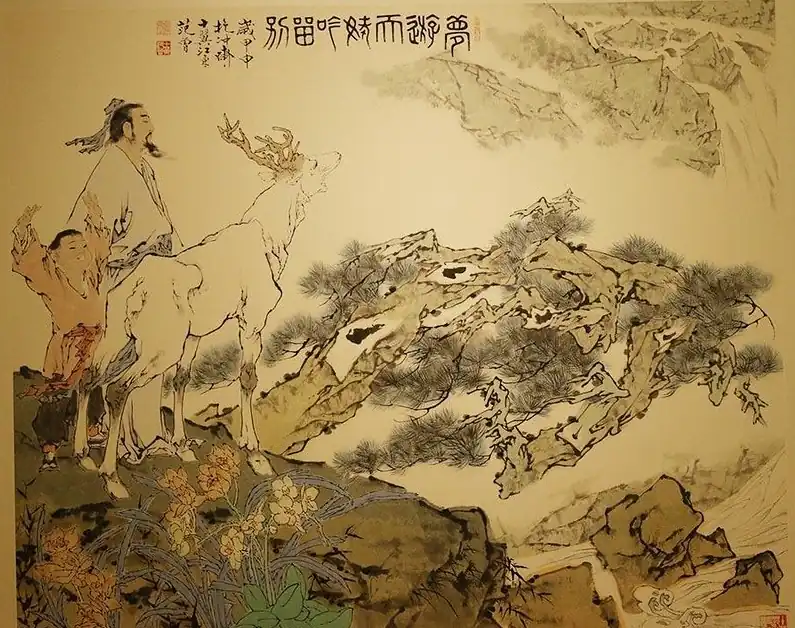
Né en 1938, Fan Zeng est actuellement doyen de l’Institut de peinture chinoise de l’Université de Pékin.
Il a apporté de grandes contributions au développement de la peinture chinoise, créant un précédent pour « la peinture néoclassique ».
En 1984, le musée permanent d’art Fan Zeng a été créé dans la préfecture d’Okayama, au Japon
En 2007, a été inauguré le musée d’art Fan Zeng de l’université de Nantong.
Ou Haonian, né à Guangdong en 1935, s’installe à Taïwan en 1970 où il devient l’artiste numéro un.
À l’âge de dix-sept ans, Ou Hao étudie auprès de Zhao Shao-ang, un géant de l’école de peinture de Lingnan. À l’âge de 20 ans, il participe à des expositions itinérantes en Asie du Sud-Est.
Au cours des décennies suivantes, il a été invité à exposer dans divers endroits à l’étranger. Ou Haonian est reconnu et respecté par le cercle international de l’art contemporain.
Huang Yongyu, originaire du comté de Fenghuang, province du Hunan, est né à Changde le 9 juillet 1924. Cet artiste peintre chinois, appartenant à la minorité ethnique des Tujias, est actuellement professeur à l’Académie centrale des beaux-arts et ancien directeur du département Gravure. En 1946, il épouse Zhang Meixi.
Huang Yongyu a appris la peinture et la littérature en autodidacte, tout en apprenant également d’autres artistes peintres chinois, comme Li Hua. Cette autoformation lui a donné une grande liberté artistique.
En raison de ses antécédents familiaux modestes, Huang Yongyu travaille à partir de 12 ans dans de petits ateliers de porcelaine, dans les régions montagneuses de l’Anhui et du Fujian pour gagner sa vie.
Dès l’âge de 14 ans, il commence à publier ses œuvres. Ses gravures uniques sont des œuvres connues dans le monde entier.
À l’âge de 16 ans, Huang Yongyu commence à vivre de sa peinture et de la gravure sur bois.
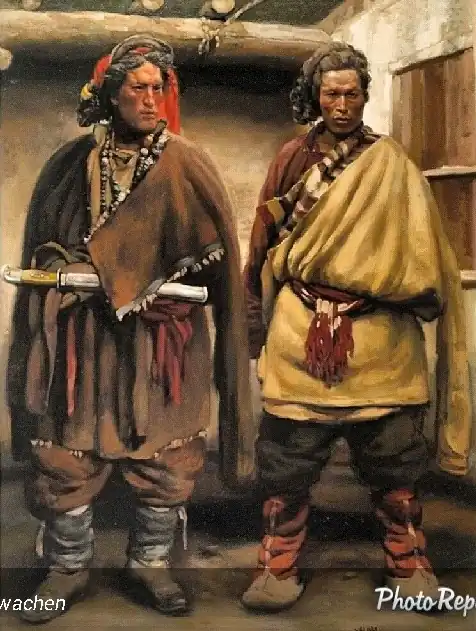
Chen Danqing est né à Shanghai en 1953.
Il fait partie des artistes contemporains les plus influents en Chine. En 1980, il a fait sensation dans les cercles artistiques nationaux et étrangers avec « Tibet Group Paintings »,
C’est le début d’une peinture subversive.
Quel que soit son style de peinture qui est souvent critiqué, Chen Danqing garde une sorte d’élégance et de simplicité qui touche le public.
Gao Zhanxiang est né dans le village de Haojiafu, Tongzhou, en novembre 1935.
Calligraphe et photographe, il attache une grande importance au développement des entreprises culturellesdans son pays et prend toujours la défense de l’art national chinois.
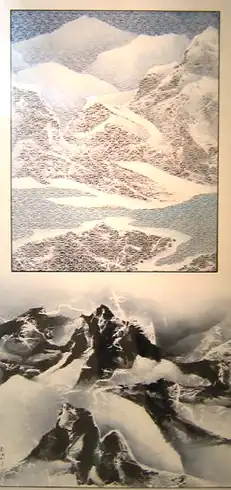
Liu Guosong, originaire de Qingzhou, Shandong, est né à Anhui en 1932.
Il s’est installé à Taïwan en 1949 et a commencé à apprendre la peinture à l’âge de 14 ans, alors qu’il était lycéen à Wuchang.
À l’âge de 20 ans, il étudie et pratique la peinture occidentale. Diplômé de l’Université normale de Taiwan en 1956, il fonde la May Painting Society la même année. En 1968, ilparticipe à la création de la Chinese Ink Painting Society.
Il est actuellement maître de conférences au Département des beaux-arts de l’Université chinoise de Hong Kong.
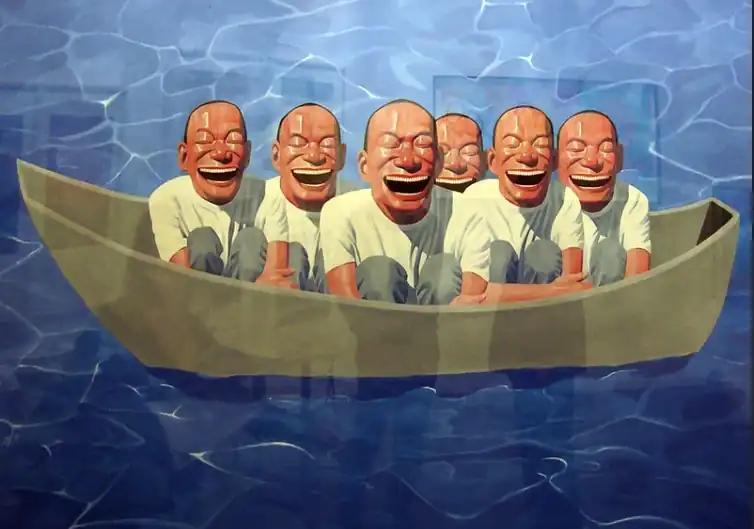
Né en 1962 à Daqing, Yue Minjun est considéré comme une icône de l’art contemporain.
C’est le représentant le plus réputé des jeunes peintres chinois.
À l’origine du « réalisme cynique ». Yue Minjun caricature l’uniformisation de la société chinoise. Yue Minjun vit et travaille à Pékin.
Ai Weiwei est une figure importante de la scène artistique chinoise indépendante.
C’est le représentant principal des artistes engagés. Il met tout son talent pour la lutte en faveur des droits de l’homme et s’oppose parfois ouvertement au gouvernement chinois.
Dans le monde, l’artiste contemporain Ai Weiwei est considéré comme un peintre majeur.
Originaire de Pékin où il nait en 1972, il y vit toujours.
Cet artiste est l’exemple de l’utilisation de divers matériaux et médias pour parvenir à ses fins.
Provocateur, il illustre les excès d’une urbanisation et d’une matérialisation rapide de la Chine.
Peintre surréaliste, Zhang Xiaogang est devenu célèbre avec ses séries Bloodline, (portraits stylisés et souvent monochromatiques de la famille traditionnelle chinoise).
Il propose des personnages traditionnels de la Révolution culturelle.
Aujourd’hui, Zhang Xiaogang est considéré comme l’un des artistes les plus importants de sa génération. Il est recherché par les plus grands collectionneurs et le protégé du collectionneur Bernard Arnaud.
Beaucoup de ces artistes ont connu la Révolution Culturelle de 1966. Certains subirent aussi la censure du Parti Communiste Chinois. Ce passé compliqué est sans doute à l’origine de l’extraordinaire créativité des artistes chinois contemporains. La notoriété de l’artiste peintre chinois contemporain ne cesse de s’accroitre et les prix des œuvres flambent avec l’intérêt de grands collectionneurs.
L’art contemporain chinois est d’une extraordinaire modernité tout en conservant l’expérience d’une culture pluri millénaire.
Sujets voisins: