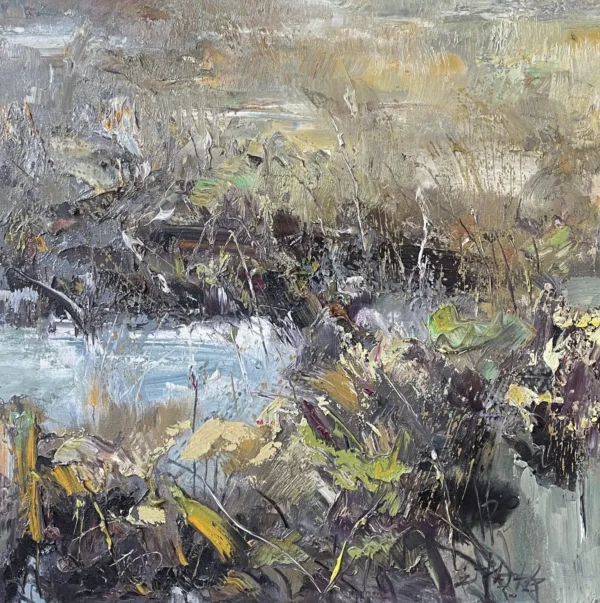
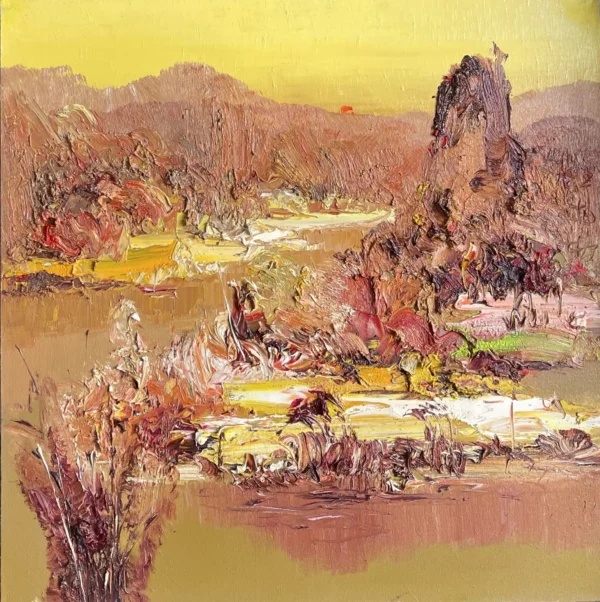
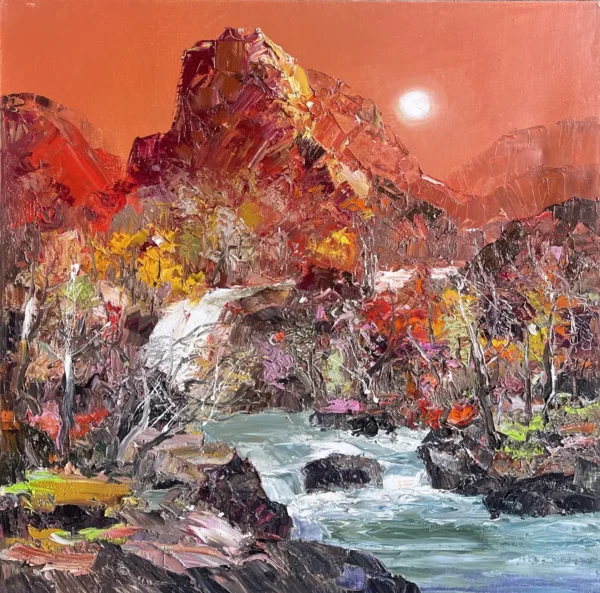
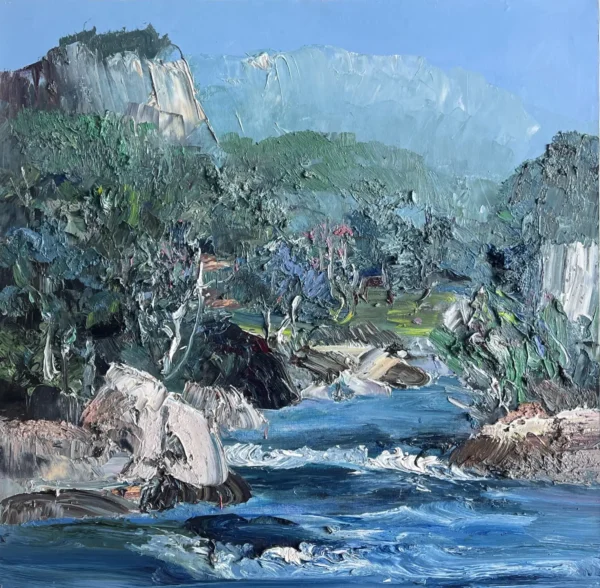
Baisong Wang réussit à capturer l’essence silencieuse et majestueuse de l’hiver. L’utilisation subtile de la texture, de la lumière et des tons froids confère à l’œuvre une force qui transcende la simple représentation du paysage. Baisong Wang mêle techniques modernes de peinture à l’huile et influences traditionnelles chinoises. Il crée une œuvre d’art à la fois contemporaine et intemporelle, où la nature devient un espace de contemplation et de mystère. Ce tableau invite le spectateur à une immersion totale dans la tranquillité glaciale de l’hiver. Il suscite des réflexions profondes sur la puissance et la beauté de la nature endormie.
100 x 80 cm
Explorez les créations de l’artiste Baisong Wang, (s’ouvre dans un nouvel onglet) soigneusement sélectionnées pour refléter la diversité et l’originalité de son travail. Parcourez cette catégorie dédiée pour découvrir des pièces uniques et emblématiques de cet artiste incontournable.


Analyse technique de l’œuvre « Winter Snow C » de Baisong Wang
Né en 1952 dans la province de Liaoning, Baisong Wang est un peintre chinois de renommée internationale, ayant acquis une reconnaissance pour sa capacité à capturer la beauté naturelle à travers une fusion de techniques occidentales et orientales. Diplômé de l’Académie des Beaux-Arts Lu Xun, il s’est fait un nom en explorant la nature à travers des paysages empreints de spiritualité. Ses œuvres traduisent souvent l’essence de la nature, en particulier les montagnes et rivières de Chine, dans une technique moderne de peinture à l’huile.
Analyse technique : « Winter Snow C » est une peinture à l’huile qui fait appel à une palette de tons froids, dominée par des nuances de bleu, de blanc et de gris. La texture épaisse de la peinture, appliquée par des gestes dynamiques, donne une impression de matière accumulée, presque sculptée sur la toile. Elle rappelle la neige qui recouvre le paysage. Les traits irréguliers et les coups de peinture contribuent à rendre l’effet visuel d’une nature gelée, figée sous la glace et la neige. Baisong Wang se sert de la lumière de façon subtile pour capturer la blancheur éclatante de la neige, en contraste avec les ombres froides des montagnes et des arbres. Le ciel est rendu par des touches larges et floues, créant une transition douce entre la terre et l’air, tandis que la végétation et l’eau sont traduites par des textures plus complexes, apportant une sensation de profondeur. Baisong Wang mélange des techniques de superposition pour évoquer les couches de neige et de glace. Il joue sur la transparence et l’opacité.
Analyse stylistique : Le style du tableau illustre parfaitement l’approche expressionniste de Baisong Wang. Sa technique de l’empâtement et une gestuelle vigoureuse expriment les forces de la nature. L’abstraction est également présente dans cette œuvre, notamment dans la manière dont les formes, comme les arbres et les montagnes, sont à peine discernables à travers la neige tourbillonnante. Ce style semi-abstrait incite le spectateur à interpréter le paysage à sa guise. Le sentiment d’immensité est accentué par la superposition des textures et des couleurs, qui créent un effet de perspective. La neige, omniprésente, est à la fois douce et brute, suggère la puissance de l’hiver, une force naturelle qui efface les détails tout en magnifiant les formes. La composition, apparemment désordonnée, renforce cette idée de nature brute.
L’influence du style chinois traditionnel : Dans cette toile, on perçoit l’influence du style traditionnel chinois à travers l’importance donnée aux éléments naturels et à l’interaction entre les forces opposées, comme la lumière et l’ombre, le plein et le vide. Les montagnes et la neige, thèmes récurrents dans la peinture de paysage chinoise (shan shui), sont ici réinterprétés dans une technique moderne à l’huile, mais conservent cette dimension contemplative propre à la tradition. Baisong Wang exploite l’espace négatif pour évoquer l’ampleur du paysage, un procédé souvent utilisé dans la peinture chinoise pour évoquer le vide et l’infini. Le ciel, presque dénué de détails, reflète cette approche, créant un équilibre entre la matière picturale et l’espace non travaillé, un dialogue entre présence et absence qui caractérise la philosophie taoïste.
Analyse symbolique : « Winter Snow C » est une œuvre qui transcrit la puissance et la tranquillité de l’hiver, saison de repos et de réflexion dans la culture chinoise. La neige, qui recouvre tout, symbolise à la fois la pureté et l’immobilité. Elle évoque un monde figé, où le temps est suspendu, un moment propice à l’introspection et à la contemplation. La nature, ici, est à la fois apaisante et imposante, dominée par les montagnes blanches, elle est intemporelle. L’hiver est fréquemment perçu comme une métaphore du cycle de la vie, représentant la fin et l’attente d’un renouveau. Les éléments cachés sous la neige, invisibles, rappellent cette idée de potentiel caché, d’une nature en sommeil, prête à renaître avec l’arrivée du printemps. Le paysage, effacé par la neige, devient un reflet de l’esprit humain, où la réflexion et le silence permettent de retrouver un équilibre intérieur.